Are Stink Bugs Dangerous? Humans, Cats and Dogs
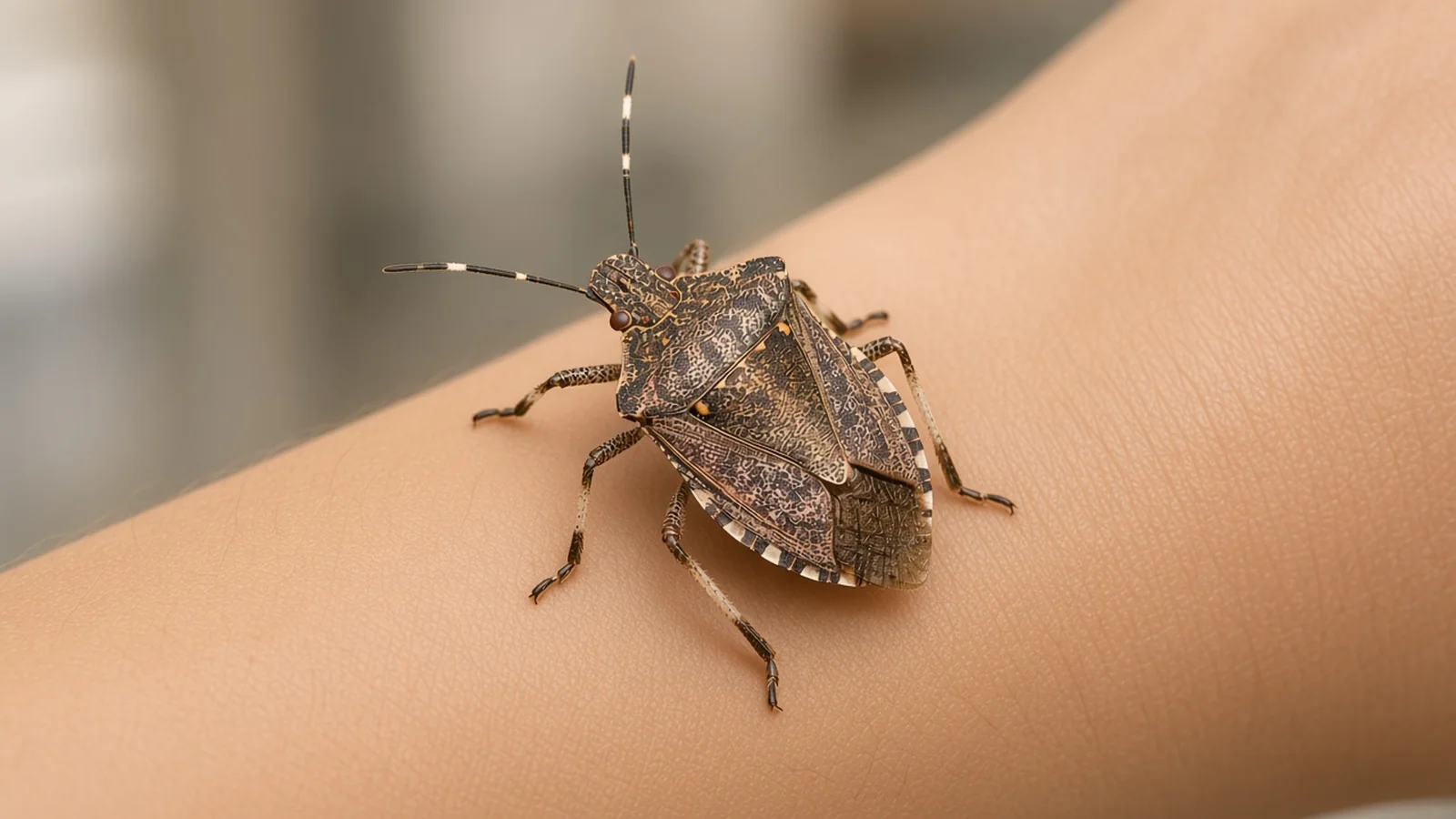
Short answer: no. Stink bugs do not bite, do not sting, carry no disease to people or pets, and are not poisonous in the venomous sense. Their one weapon is a smelly chemical spray. Here is what that spray actually does — to your skin, to a curious dog, and to a cat.
TL;DR
- Stink bugs do not bite, sting, or spread disease to humans or pets.
- The spray is an irritant. A pet that mouths one is not in a published severe-poisoning case, and the secretion can still bother the mouth and gut.
- Facial swelling, hives, or trouble breathing means calling a vet now. The poison lines below are phone numbers only, not a toxicity rating.
The spray: what it is and what it does
When alarmed, a stink bug releases a foul-smelling defensive chemical. Penn State Extension says those chemicals can act as an aeroallergen in sensitive people, with a runny nose and itchy, watery eyes, and that crushing a bug against skin can cause dermatitis at that spot in a small percentage of people. NC State Extension says the taste also deters some birds and other animals. That is a defense, not a venom.
Crushed bugs in a vacuum bag are the common household version: Penn State notes the smell is quite apparent when many are sucked into a vacuum. Seal and empty the bag outside promptly.
Stink bugs and humans
For most people the only injury from a stink bug is to whatever it landed on. If one sprays you — the classic "it sprayed me" moment — wash the area with soap and water and launder clothes it touched. Do not smash it barehanded; brush it into a container instead. Penn State says sensitive people can get a runny nose, itchy watery eyes, or a spot of dermatitis. Contact a doctor if a rash, swelling, or any breathing change appears.
Stink bugs and dogs
Dogs grab bugs that move. University of Maryland Extension says brown marmorated stink bugs are not harmful to people, houses, or pets: they do not bite, sting, or spread disease. That is a nuisance description, not a feeding study. NC State Extension reports that dogs, cats, and chickens have been seen eating stink bugs with no ill effects. Read that as illness was not seen in those cases, not as any amount is fine.
The mouth-and-stomach detail is secondary. Orkin, a commercial pest-control site, quotes Dr. Franklin of Mid-Atlantic Veterinary Hospital: stink bugs are not poisonous, but the secretions can irritate the gastrointestinal tract of dogs and cats and may cause vomiting and heavy drooling, plus irritation of the tongue, gums, lips, and the inside of the cheek. Orkin is not the only basis for this page. The same mouth pattern, for dogs, is on stink bug bites on dogs.
Stink bugs and cats
The same two extension pages cover cats. Maryland Extension includes pets in the not-harmful line. NC State includes cats in the seen-eating-them sentence. Cats often get the spray in the mouth and then stop, which lines up with the irritation that veterinarian describes — drooling and a sore mouth — more than a story about swallowing the whole bug. This page does not treat that as proof the bug is safe to eat.
If a cat or dog eats a stink bug
Can cats eat stink bugs? No. Can dogs eat them? No. A stink bug is not food. A single accidental mouthful is not described by Maryland Extension or NC State as a severe poisoning. The defensive spray can still irritate the mouth and the gut. Penn State describes those chemicals as an irritant and, in sensitive people, as an aeroallergen. That human finding is a reason to be more careful with a pet. It is not a pet toxicology rating.
ASPCA Animal Poison Control and Pet Poison Helpline do not publish a brown marmorated stink bug page that this update could cite. The numbers below are general poison-consult lines, not an official non-toxic or toxic label.
What the Pet Poison Helpline emergency page says, for any suspected poisoning: move the pet away from the material, check that the pet is breathing and acting normally, do not give a home antidote, and do not induce vomiting unless a veterinarian or the helpline tells you to. Then call. ASPCA Poison Control is (888) 426-4435, and that page says a consultation fee may apply. Pet Poison Helpline is (855) 764-7661. The helpline page does not state a fee. Call your own veterinarian first if you already have one. These lines are the other option, not a substitute for an emergency clinic if the pet is in distress.
If the mouth is coated and the pet lets you, rinse with plain water only. Do not pour soap into the mouth. Soap is not a treatment on either poison-control page, and the helpline says not to give home antidotes. Offer fresh water. Neither the extension pages nor the two hotline pages publish a recovery clock for stink bugs, so better in 24 hours is not a sourced prognosis. Watch through the day and overnight. Call if heavy drooling, vomiting, or a dull pet is still going after about a day.
Call a veterinarian immediately for facial swelling, hives, trouble breathing, vomiting that keeps repeating, or a pet that stays dull past a day. Those signs are the allergic-looking exception. Penn State allergy notes are about people, not a published series of pet cases. The way to stop the next mouthful is to keep the bugs out of the house: why stink bugs come inside and how to keep them out.
What stink bugs will not do
NC State says they do not bite, sting, transmit disease, or chew structural materials. Penn State says they will not reproduce inside a structure or damage it. Maryland Extension says they do not suck blood and do not eat or bore into wood. They come indoors to overwinter, which is covered in stink bugs in the house in winter.
More guides
Frequently asked questions
Are stink bugs dangerous to humans?
No. NC State Extension says they do not bite, sting, transmit disease, or chew structural materials. Their defense is a foul-smelling chemical released when they are alarmed. Penn State Extension says that chemical can act as an aeroallergen in sensitive people, with a runny nose and itchy, watery eyes, and that crushing one against skin can cause dermatitis at that spot.
Are stink bugs poisonous to cats and dogs?
Not in the venomous sense, and not by an official toxicity rating. University of Maryland Extension says they are not harmful to pets because they do not bite, sting, or spread disease. NC State Extension says dogs, cats, and chickens have been seen eating them with no ill effects. Do not read that as any amount is fine. A veterinarian quoted by Orkin, a commercial pest-control site, says they are not poisonous but the secretion can irritate the mouth and the gut. ASPCA Poison Control and Pet Poison Helpline do not publish a stink-bug page, so those lines are not a toxic or non-toxic label for this insect.
Can cats eat stink bugs?
No. A stink bug is not food. Maryland Extension includes pets in the not-harmful line: no bite, no sting, no disease. NC State Extension includes cats among animals seen eating them with no ill effects, and says the defensive chemical tastes bad enough to deter some animals. That is not a feeding study. Orkin quotes a veterinarian who says the secretion can irritate a cat mouth and gut, with heavy drooling or vomiting. Call your own vet if you are worried. You can also call ASPCA Animal Poison Control at (888) 426-4435, where a consultation fee may apply, or Pet Poison Helpline at (855) 764-7661. Those numbers are general poison lines only.
Can dogs eat stink bugs?
No. Same answer as for cats. One accidental mouthful is not described by Maryland Extension or NC State as a severe poisoning, and NC State says dogs have been seen eating them with no ill effects. The secretion can still irritate the mouth and stomach. The dog-specific mouth pattern is on the stink bug bites on dogs page. Call a vet for facial swelling, hives, trouble breathing, vomiting that keeps repeating, or a dog that stays dull. The cited pages do not publish a recovery clock.
A stink bug sprayed me. What do I do?
Wash the spot with soap and water and launder clothes it touched. Penn State Extension says the defensive chemicals can act as an aeroallergen in sensitive people and can cause contact dermatitis if crushed on skin. Contact a doctor if a rash, swelling, or any breathing change persists.
My dog ate a stink bug. When do I call the vet?
Call your vet now for facial swelling, hives, trouble breathing, vomiting that keeps repeating, or a dog that stays dull. Move the dog away from the bug. Pet Poison Helpline says not to give a home antidote and not to induce vomiting unless a veterinarian or the helpline tells you to. If you rinse the mouth, use plain water only, not soap. Offer water. These sources do not give a recovery timeline, so call if drooling or vomiting is still going after about a day. ASPCA Animal Poison Control is (888) 426-4435 and says a consultation fee may apply. Pet Poison Helpline is (855) 764-7661. Neither page is a stink-bug rating.
Do stink bugs damage a house or spread to food?
No. Penn State Extension says they do not reproduce indoors and do not damage the structure. They are a nuisance: they smell when crushed. Vacuum them up and empty the bag outside.
Sources
Last updated: . These guides have no named author and no expert reviewer. The notes say what each page actually supports.
- NC State Extension: Brown marmorated stink bug FAQ — They do not bite, sting, transmit disease, or chew structural materials. Dogs, cats, and chickens have been seen eating them with no ill effects. The smell is a defense chemical released when the bug is alarmed, and the taste deters some birds and other animals. That note is not a dose study.
- Penn State Extension: Brown marmorated stink bug — The defensive chemicals can act as an aeroallergen and cause a runny nose or itchy, watery eyes in sensitive people. Crushing a bug against skin can cause dermatitis at that spot, in a small percentage of people. This is a human finding, not a pet toxicology study.
- University of Wisconsin Extension: Brown marmorated stink bug — Indoors they are harmless to people and structures. Crushing them releases a strong odor and can stain light-colored materials.
- University of Maryland Extension: Tips for dealing with brown marmorated stink bugs — They are not harmful to people, houses, or pets. They do not bite, sting, suck blood, or spread disease, and they do not eat or bore into wood. That is a nuisance description, not a statement that any amount is safe to eat.
- Orkin: Stink bugs and pets (secondary) — Secondary commercial source, not an extension fact sheet. It quotes Dr. Franklin of Mid-Atlantic Veterinary Hospital: stink bugs are not poisonous, but the secretions irritate the gastrointestinal tract of dogs and cats and may cause vomiting and heavy drooling, plus irritation of the tongue, gums, lips, and the inside of the cheek. Orkin says there do not seem to be serious long-term effects from a pet eating or chewing on one.
- ASPCA Poison Control — ASPCA Poison Control is (888) 426-4435, 24/7. A consultation fee may apply. The page is a general animal-poison line. It does not publish a brown marmorated stink bug profile or a toxicity rating for this insect.
- Pet Poison Helpline: Emergency instructions — Pet Poison Helpline is (855) 764-7661. For a suspected poisoning: remove the pet from the area, check breathing and behavior, do not give a home antidote, and do not induce vomiting unless a veterinarian or the helpline says to, then call. The page does not name stink bugs and does not list a fee.