Do Stink Bugs Bite Dogs? What Owners Need to Know
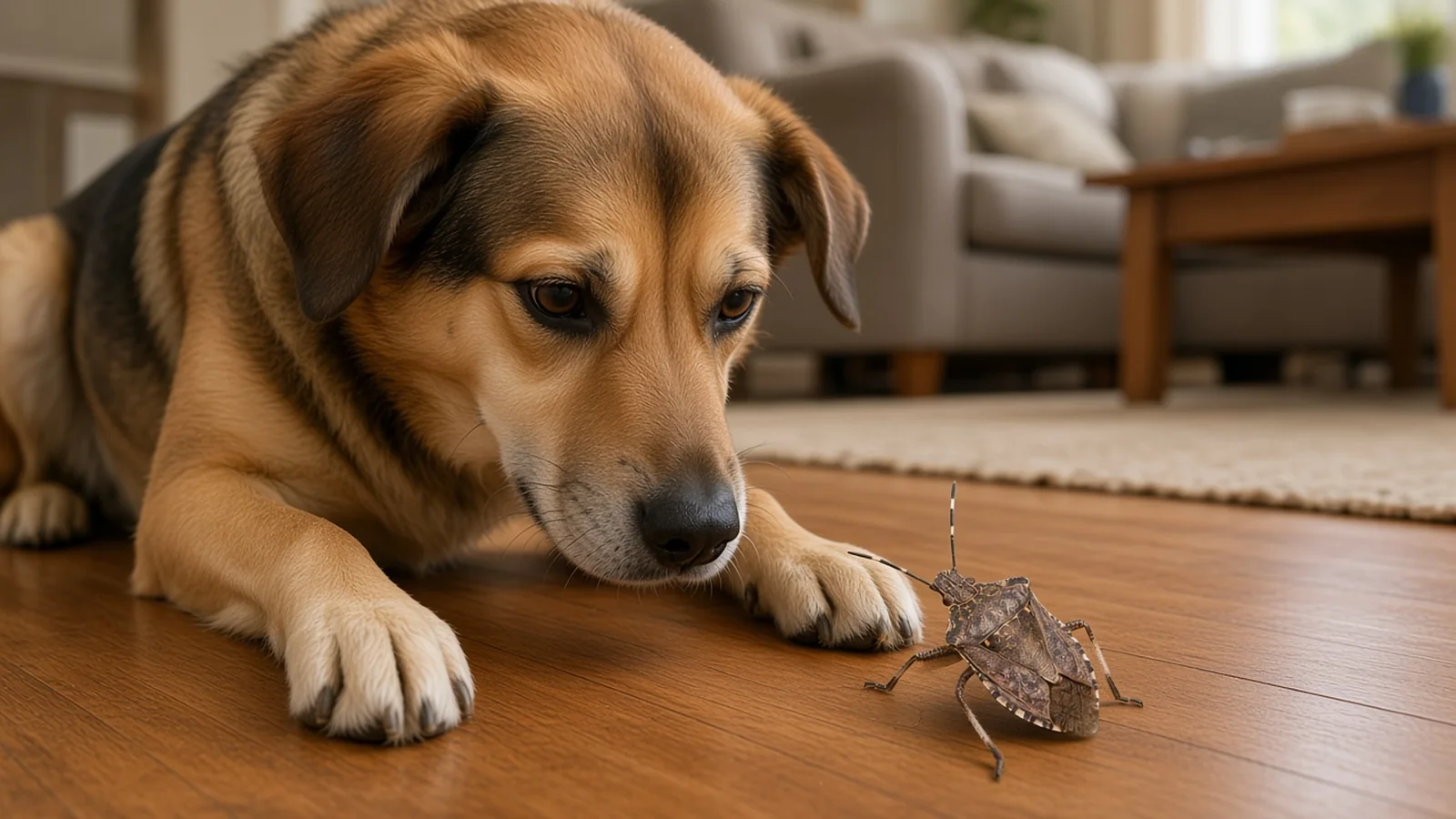
Short answer: they do not bite. NC State Extension says stink bugs do not bite, and their mouthparts are for plants, so there is no bite wound to treat. What owners actually see is a dog that grabbed one and got a mouthful of defensive spray. A veterinarian quoted by Orkin says that can mean drooling or vomiting. The cited pages do not give a recovery clock.
TL;DR
- Stink bugs do not bite dogs. NC State says the mouthparts are for plant sap, and both NC State and Maryland say they do not bite.
- The real injury is the defensive spray on the mouth and gut: drooling and sometimes vomiting, from a secondary veterinary quote, not a toxicology paper.
- Rinse the mouth with plain water only, offer water, and call a vet if signs continue. Facial swelling, hives, or trouble breathing means a vet now.
- Orkin says serious long-term effects do not seem to be the usual outcome. That is a secondary source. Keeping the bugs out of the house matters more than the one mouthful.
Why a stink bug cannot bite your dog
A stink bug is a true bug. NC State Extension says the mouthparts are the piercing-sucking kind used to puncture plant tissue, and that the bugs do not bite or sting. Maryland Extension says the same for people and pets: they do not bite, sting, or spread disease. When a dog yelps after grabbing one, it is reacting to the defensive spray, not to a bite wound. This page does not claim a measurement of dog skin.
That distinction matters because it changes what you are looking for. You are not checking for punctures or swelling at a bite site. You are checking the mouth, lips and eyes for irritation from a chemical spray.
What actually happens when a dog mouths a stink bug
When alarmed, a stink bug releases a defensive chemical. Penn State Extension says those chemicals can be an aeroallergen in sensitive people and can cause dermatitis if crushed on skin. That is a human finding. In a dog’s mouth, the pet-specific description we can cite is secondary: Orkin quotes Dr. Franklin of Mid-Atlantic Veterinary Hospital, who says the secretions are not poisonous but irritate the tongue, gums, lips, cheek, and gut, and may cause vomiting and heavy drooling.
NC State says dogs have been seen eating stink bugs with no ill effects. That sentence and the Orkin quote are not the same claim, and neither is a toxicology monograph. Serious long-term effects do not seem to be the usual outcome, which is Orkin’s wording, not an extension guarantee.
Symptoms you will probably see
- Heavy drooling
- Vomiting
- Irritation of the tongue, gums, lips, and the inside of the cheek
Those three are the signs named in the Orkin veterinary quote. A dog may also paw at its mouth or shake its head while it tries to clear the taste. That fussing is not a published sign list, and this page does not time it to the first hour. Keep water available and do not force food.
The first 30 minutes
- Take the bug away from the dog and get rid of it outside — do not crush it indoors, which spreads the smell.
- Rinse the mouth with plain water if the dog will let you. Do not use soap inside the mouth.
- Wipe the muzzle, lips and any skin the spray touched with a damp cloth, then wash your own hands.
- Flush the eye with clean water for a few minutes if the dog is squinting or rubbing one eye.
- Offer fresh water and let the dog settle. Note the time so you can tell a vet how long the signs have lasted. These sources do not set a 24-hour all-clear.
When to call the vet instead of waiting
Call without waiting if you see facial swelling, hives anywhere on the body, difficulty breathing, repeated vomiting rather than one episode, or a dog that stays dull and off its food beyond a day. Those signs are the allergic-looking exception. Penn State’s allergy notes are about people. The full breakdown for humans, cats, and dogs is the page that carries the qualified answer. You can also call ASPCA Animal Poison Control at (888) 426-4435, which says a consultation fee may apply, or Pet Poison Helpline at (855) 764-7661. Neither number is a stink-bug rating. The helpline says not to induce vomiting unless a veterinarian or the line tells you to.
Cats can get the same mouth irritation
This page stays about dogs. Cats can show the same mouth-irritation pattern. Orkin’s veterinarian quote covers dogs and cats together: the secretion can irritate the mouth and the gut. Maryland Extension includes pets when it says the bugs are not harmful, meaning they do not bite or spread disease. NC State includes cats in the animals seen eating them with no ill effects. None of that is a reason to open a separate cat page. The qualified write-up, with the limits on those sources, is if a cat or dog eats a stink bug.
Keeping dogs away from the fall invasion
Dogs catch stink bugs because the bugs come to the house. The fix is on the building: Penn State Extension says to seal cracks around windows, doors, siding, utility pipes, behind chimneys, and under the fascia with silicone or silicone-latex caulk, and to repair screens. When to do that exterior seal, so you do not trap bugs already in the walls, is in when to seal.
More guides
Frequently asked questions
Do stink bugs bite dogs?
No. NC State Extension says they do not bite or sting, and that their mouthparts are for piercing plant tissue. Maryland Extension says they do not bite pets or spread disease. A dog that yelps after grabbing one is reacting to the defensive spray, not to a bite wound.
My dog ate a stink bug. Is it poisonous?
Not in the venomous sense, and not by an official rating. NC State Extension says dogs have been seen eating stink bugs with no ill effects. A veterinarian quoted by Orkin says the secretion is not poisonous but can irritate the mouth and gut, with drooling or vomiting. That commercial page is a secondary source. ASPCA Poison Control and Pet Poison Helpline do not publish a stink-bug profile.
How long do the symptoms last?
The extension pages and the two poison-control pages do not publish a recovery clock for stink bugs. Orkin describes vomiting and heavy drooling from mouth and gut irritation and says serious long-term effects do not seem to be the usual outcome. Call your vet if signs continue or the dog is in distress.
What are the emergency signs?
Call a vet now for facial swelling, hives, trouble breathing, vomiting that keeps repeating, or a dog that stays dull. Penn State describes the defensive chemicals as an aeroallergen in sensitive people, not in a series of pet cases. Treat those signs as urgent anyway. You can also call ASPCA Animal Poison Control at (888) 426-4435, where a fee may apply, or Pet Poison Helpline at (855) 764-7661.
Can a cat get the same reaction?
Yes. The same mouth irritation can happen in cats. The full qualified answer, including what the poison lines do not cover, is on the are stink bugs dangerous page. This page stays about dogs.
Sources
Last updated: . These guides have no named author and no expert reviewer. The notes say what each page actually supports.
- NC State Extension: Brown marmorated stink bug FAQ — They do not bite, sting, or transmit disease. Mouthparts are the piercing-sucking kind used on plant tissue. Dogs, cats, and chickens have been seen eating stink bugs with no ill effects. The defensive chemical is released when the bug is alarmed, and its taste deters some animals. That is not a dose study.
- University of Maryland Extension: Tips for dealing with brown marmorated stink bugs — They are not harmful to pets. They do not bite, sting, or spread disease. That line describes the insect as a household nuisance, not a feeding trial.
- Penn State Extension: Brown marmorated stink bug — Defensive chemicals can be an aeroallergen in sensitive people and can cause contact dermatitis if crushed on skin. That is a human finding. Use it cautiously if a pet looks allergic. It is not a published series of pet cases.
- Orkin: Stink bugs and pets (secondary) — Secondary source. A veterinarian quoted on this commercial page says the secretions are not poisonous but can irritate the mouth and gastrointestinal tract of dogs and cats, with vomiting, heavy drooling, and irritation of the tongue, gums, lips, and cheek.
- ASPCA Poison Control — General poison line, (888) 426-4435. A consultation fee may apply. No stink-bug profile is published on this page.
- Pet Poison Helpline: Emergency instructions — General emergency steps and the number (855) 764-7661. Remove the pet, do not give a home antidote, and do not induce vomiting unless a veterinarian or the helpline says to. No stink-bug entry, and no fee stated on this page.