Stink Bugs in Wisconsin: Seasons, Counties and Control
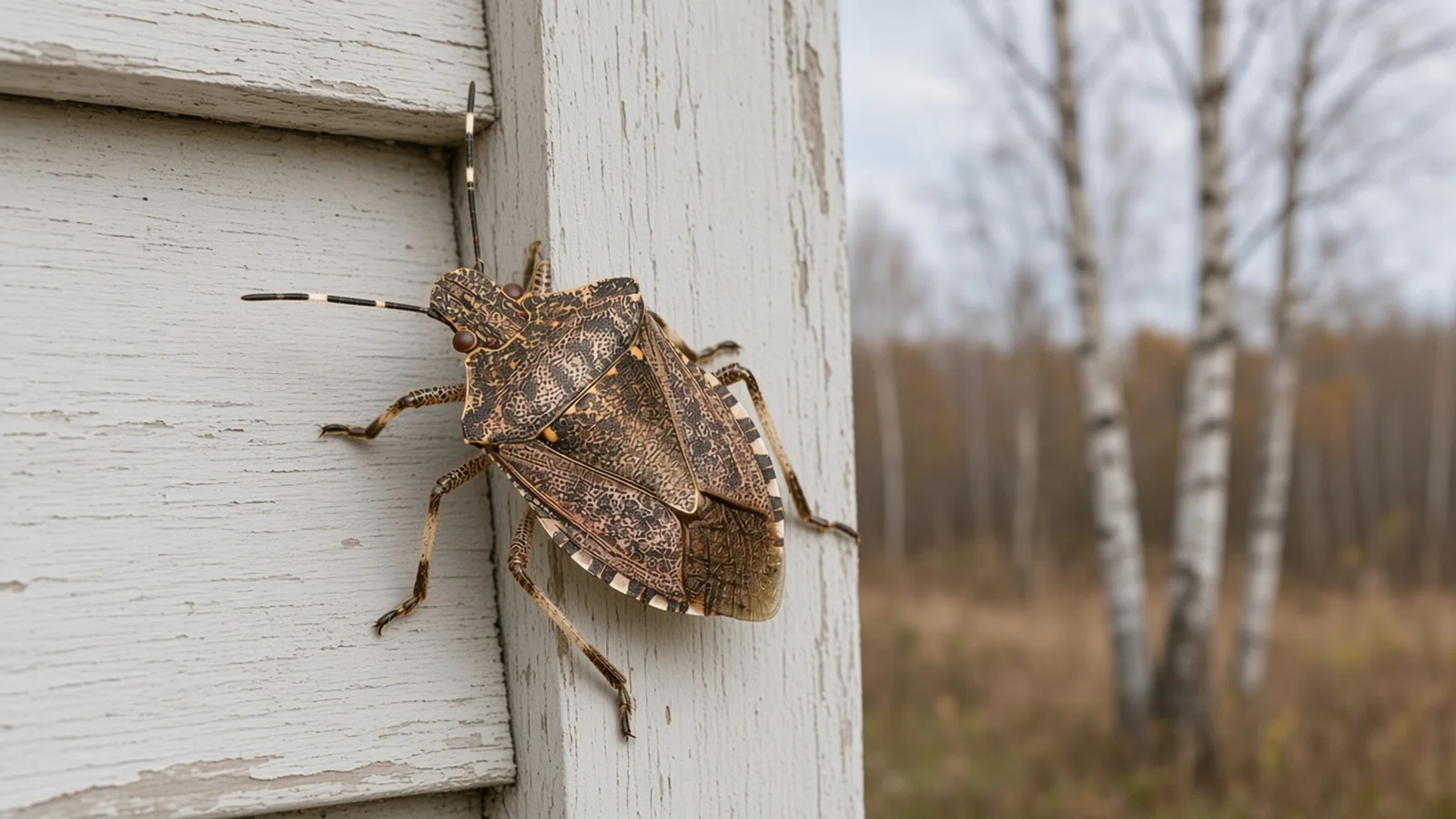
If you are fighting fall invasions of shield-shaped bugs in Wisconsin, you are fighting the brown marmorated stink bug — established, spreading county by county since about 2010. Here is the state-specific timeline, where the pressure concentrates, and the control plan extension guidance actually supports.
TL;DR
- First detected in Wisconsin around 2010; found in 50+ counties since (UW Extension).
- One generation a year: eggs spring-summer, new adults late summer, house invasions in fall.
- Best control is mechanical: caulk, weatherstripping and screens before September.
- Indoors they are harmless — vacuum, do not crush; that guide is one click away.
The Wisconsin timeline: one generation, one invasion
According to UW Extension's Department of Horticulture profile, the brown marmorated stink bug follows a single-generation rhythm in Wisconsin:
- Early spring: overwintered adults emerge from walls, woodpiles and leaf litter as temperatures climb; a few stragglers wake on warm January and February days.
- Mid-spring to mid-summer: mating and egg-laying. Look for the pale barrel-shaped egg rows (20-30 per batch) on the underside of leaves.
- Early to mid-summer: nymphs feed on maples, lindens, fruit trees and field crops. They grow through five stages.
- Mid to late summer: new adults appear and start looking for winter shelter — your south-facing wall is the first sign.
- September-October: the invasion season. Warm sunny days pull aggregations to building sides; gaps around siding, soffit vents, window frames and utility pipes are the front door.
Once inside, they are dormant rather than breeding: stink bugs do not reproduce or cause structural damage in Wisconsin homes — the same fact every extension office repeats to calm the panic.
Where in Wisconsin it is worst
UW Extension reports the strongest populations in south-central, southeastern and east-central Wisconsin, consistent with how the bug moved north and west from its eastern US foothold. In these regions, fall counts in the hundreds around a single house are routine; the occasional home reports thousands. Northern and western counties see lighter pressure, but the trajectory is toward wider distribution every year.
What they feed on here
Wisconsin hosts include apple, cherry, peach, grape and hop farms, and the home-garden favorites — tomato, bean, sweet corn and pepper — plus ornamentals like catalpa and redbud. Home-lot damage is usually cosmetic (the pale scarred patches described in our stink bugs on tomato plants guide); commercial orchard pressure is managed by growers with extension threshold guidance.
The Wisconsin control plan
Before fall (the decisive window). UW Extension calls physical exclusion the most effective long-term control: caulk cracks around windows, doors, siding and utility pipes with silicone or silicone-latex caulk; repair screens; install weatherstripping on door sweeps. Do this in August and early September, while the bugs are still outside.
During invasion. Keep the outside bright and the inside dim — they move toward light. Turn off or shield exterior lights near entry points, and use a shop-vac or handheld vacuum with a nozzle to remove bugs without crushing them.
Indoors all winter. Vacuum, dispose of the bag outside, and ignore the ones you do not see — they are barely alive in cool rooms. The winter-specific guide walks through the rest: stink bugs in the house in winter.
Sprays. Residual insecticides labeled for perimeter use give partial help before bugs enter; they do not replace exclusion, and most Wisconsin homeowners never need them.
Our recommended picks
As an Amazon Associate, we earn from qualifying purchases. Links below are affiliate links marked as sponsored — a qualifying purchase may earn us a commission at no extra cost to you.
Silicone caulk (exterior)
The #1 control step in UW Extension guidance: seal the gaps they use.
Weatherstripping kit
For door sweeps and moving joints where caulk cannot flex.
Handheld vacuum (bug-proof)
Removes winter clusters without crushing them and leaving the smell.
More guides
Frequently asked questions
Are stink bugs a problem in Wisconsin?
Yes — and the problem is named. The brown marmorated stink bug was first detected in Wisconsin around 2010 and has since been found in at least 50 of the state's counties, according to University of Wisconsin Extension. Home invasions every fall confirm it is established, not a passing invasion.
Which parts of Wisconsin have the most stink bugs?
UW Extension reports the strongest populations in south-central, southeastern and east-central Wisconsin. The bug spread from its eastern-US establishment zones, so counties closest to those pathways see the densest fall aggregations first, with northern counties seeing lighter but growing numbers.
When do stink bugs come inside in Wisconsin?
On the first warm fall days after Labor Day, usually September and October, adult bugs gather on the south and southeast faces of houses and find gaps around siding, soffits, window frames and utility penetrations. Once inside they stay dormant through winter and some emerge on warm sunny days in February and March.
How many generations per year in Wisconsin?
One. UW Extension notes Wisconsin stink bugs have a single generation per year: overwintered adults mate from spring into early summer, lay eggs from mid-spring through mid-summer, and the new adults appear mid-to-late summer — which is exactly when they start looking for a place to overwinter.
Do stink bugs kill plants in Wisconsin gardens?
They damage them, mostly cosmetically. Wisconsin hosts include apples, cherries, peaches, grapes and hops on farms, and tomatoes, beans and sweet corn in home gardens. Damage is usually light in Wisconsin compared with orchard states, but a heavy late-summer population can scar fruit — the full guide is in our tomato-plants article.
Sources
Last updated: . These guides have no named author and no expert reviewer. The notes say what each page actually supports.
- University of Wisconsin Extension: Brown marmorated stink bug — First detected in Wisconsin around 2010, since found in 50 or more counties, with the strongest presence in south-central, southeastern, and east-central Wisconsin. One generation a year: adults overwinter, eggs are laid from mid-spring into mid-summer, and new adults appear in mid-to-late summer. Hosts include apple, cherry, peach, grape, tomato, beans, and sweet corn. Indoors they are harmless to people and structures. Seal gaps with caulk or weatherstripping, and use soapy water on bugs you can reach.
- Penn State Extension: Brown marmorated stink bug — They do not reproduce inside structures and do not cause structural damage.
- StopBMSB.org: State-by-state detections — The project maps brown marmorated stink bug by state as both an agricultural pest and a home nuisance.