Stink Bugs on Tomato Plants: Identification, Damage and Control
A stink bug on a tomato is not a crisis — it is a bruise with a mouth. Learn what the eggs, nymphs and adults look like, how to judge the damage, whether the fruit is still safe to eat, and what actually reduces their numbers.
TL;DR
- Stink bugs pierce tomato fruit and suck the juice — look for pale bleached spots and white, spongy tissue under the skin.
- The fruit is not poisonous or diseased. Cut out the damaged part and eat the rest.
- Treat the plants early: soap for nymphs on contact, neem or spinosad per label, and hand-picking rows of eggs.
- Extension services agree: sealing the house beats spraying the garden before fall.
Identify the bugs: eggs, nymphs and adults
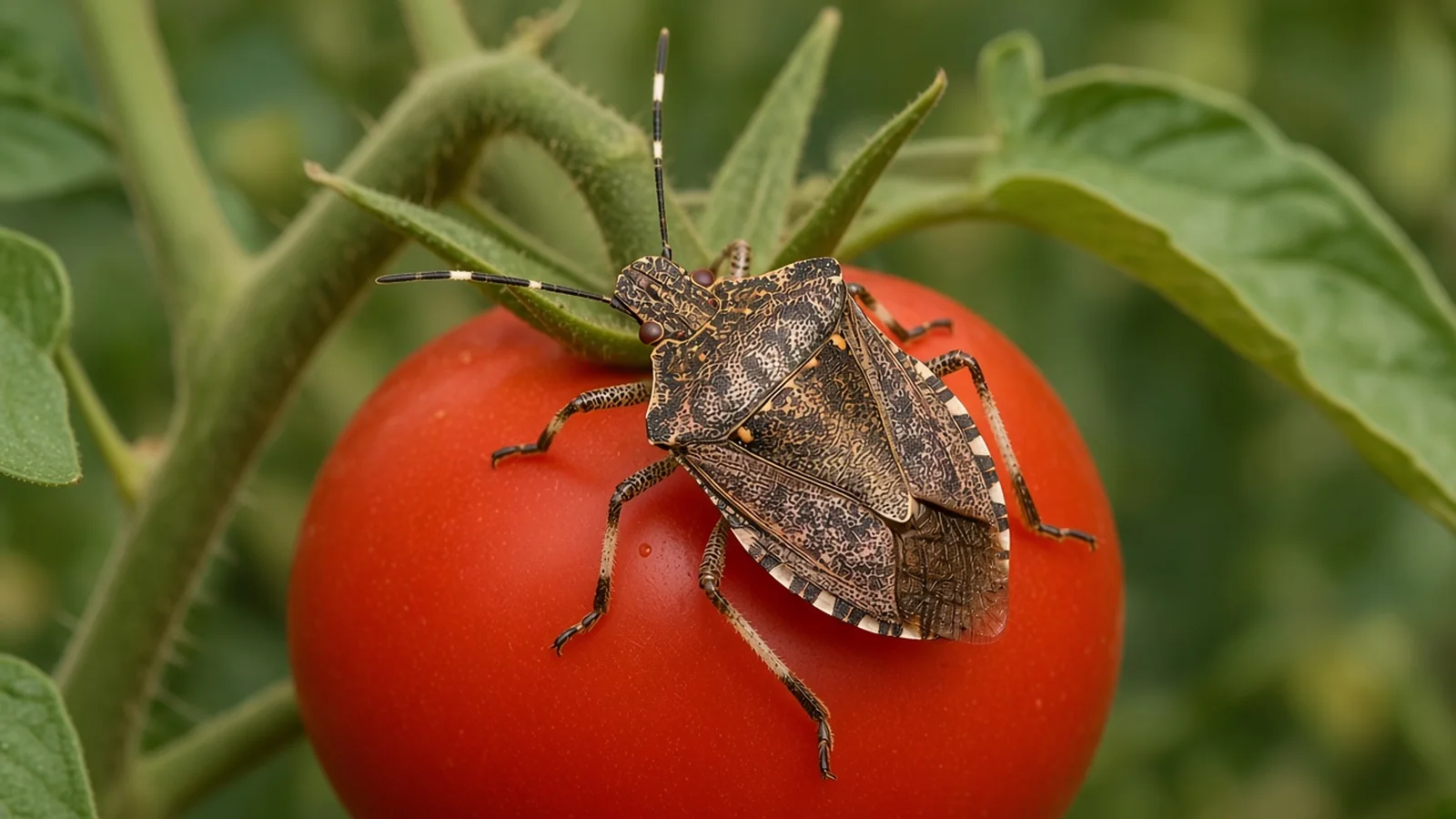
The tomato pest most US gardens see is the brown marmorated stink bug — a shield-shaped bug about 1.7 cm long, mottled brown-gray, with alternating light and dark bands along the edge of its abdomen. According to the University of Wisconsin Extension, its eggs are laid in tight rows of 20 to 30 barrel-shaped eggs on the underside of leaves — pale green at first, turning darker right before hatch. The young (nymphs) are smaller, rounder and have no wings; early instars are black with bright red or orange markings, fading to a plain grayish-brown as they grow.
Green stink bugs and other native look-alikes also feed on tomatoes in many states. The management below works for all of them — but if you want to be sure of the species, brush a bug into a jar and take it to your local extension office, which identifies specimens for free.
The damage: what to look for
Stink bugs feed with a piercing-sucking mouthpart. They insert it into the fruit, inject saliva, and drink the liquefied tissue. University of Arkansas Extension describes the result: discolored spots on the skin, and white, firm, spongy pockets just under the surface where the bug fed. Fruits often ripen unevenly around those patches. There is no hole and no frass — that is how you tell it apart from a caterpillar or beetle.
- Small pale or yellow spots on green or ripening fruit
- Corky, sunken scars and deformed shoulders on older fruit
- Ripening that streaks unevenly around a feeding site
- Actual sightings: bugs clustered on fruit clusters and leaf undersides in the warm part of the day
Safe to eat? Yes — with one cut
This is the question everyone asks when they see a bug sitting on a tomato. The answer from extension sources is straightforward: stink bugs do not inject anything toxic into fruit and they are not known to spread disease to people. The damage is mechanical — a patch of dead, spongy tissue where the bug fed. Cut out the discolored area and the rest of the tomato is safe to eat. If the scarring is heavy, the fruit will not be tasty, but it will not harm you; those are better for the compost than the plate.
Treatment: three lines of defense
1. Physical. Check leaf undersides for egg rows twice a week through midsummer. Scrape rows off with a fingernail or tissue into soapy water. Hand-pick visible bugs into a jar of soapy water. A light-baited trap placed away from the garden pulls night-flying adults off plants.
2. Organic sprays. Insecticidal soap kills nymphs on contact only — spray the bugs themselves, not the plant. Neem and spinosad products act as antifeedants and growth regulators against young nymphs; apply in the evening per the product label and re-treat after rain. Efficacy is highest on small nymphs, which is why scouting matters more than scheduling.
3. Conventional sprays. Pyrethrin and permethrin products are labeled for tomatoes at garden rates. Use them strictly per the label: correct crop, correct dose, and respect the pre-harvest interval it states. That is what extension recommendations — including University of Arkansas Extension — mean when they list a homeowner option.
Garden-wide notes
Stink bugs rarely stop at tomatoes. Beans, corn, peppers and okra get the same needle damage, and late-season adults gather around buildings for winter shelter. A garden spray program aimed only at tomato leaves leaves the rest of the yard as a reservoir. Remove weedy host plants along the garden edge, keep the perimeter tidy, and seal the house before September — the bugs you never spray are the ones that never left the garden for your walls.
Our recommended picks
As an Amazon Associate, we earn from qualifying purchases. Links below are affiliate links marked as sponsored — a qualifying purchase may earn us a commission at no extra cost to you.
Insecticidal soap spray
Kills young nymphs on contact when you spray the bug itself.
Neem oil concentrate
A deterrent and growth regulator for early-season nymphs.
Stink bug trap (light-baited)
Pulls bugs off plants and away from the house overnight.
More guides
Frequently asked questions
Are tomatoes with stink bugs safe to eat?
A stink bug does not make a tomato poisonous and it does not carry disease into your food. It feeds by piercing the fruit and sucking out juice, which leaves patches of firm, pale, spongy tissue under the skin. Cut those areas out and the rest of the tomato is safe to eat. Throw away fruit with heavy scarring or a rotting smell.
What do stink bug eggs look like on tomato plants?
The brown marmorated stink bug lays eggs in neat rows of about 20 to 30 on the underside of leaves. Each egg is barrel-shaped, pale green to cream, and tiny — around 3 mm. After a week or so the rows turn a darker, coppery color just before the nymphs hatch. If you find rows of pale barrels on the underside of tomato leaves, that is a strong sign of an infestation.
What does stink bug damage on tomatoes look like?
Stink bug damage shows up as small, pale, irregular spots on the skin and a sunken, discolored area under it. The fruit ripens unevenly and the tissue right under the feeding site stays white and spongy instead of turning red. Unlike a chewing pest, a stink bug leaves no holes — the damage looks like a bruise or a bleached patch.
What kills stink bugs on tomato plants?
Sprays that contact freshly hatched nymphs work best. Insecticidal soap kills on contact when it hits the bug itself. Neem and spinosad products deter and reduce young nymphs when applied per the product label. Pyrethrin or permethrin products labeled for tomatoes knock down larger numbers — always follow the label for the crop, the dose and the days before harvest.
Do stink bugs only attack tomatoes?
No. Tomato is a favorite, but the brown marmorated stink bug feeds on beans, corn, peppers, okra, stone fruit and many ornamentals too. If your tomatoes have them, check the neighboring crops the same week — and seal the gaps between your garden and the house before fall.
Sources
Last updated: . These guides have no named author and no expert reviewer. The notes say what each page actually supports.
- Penn State Extension: Brown marmorated stink bug — Eggs are laid in masses of 20 to 30 on the underside of leaves. Feeding on tomatoes and peppers can leave spongy areas and damaged tissue inside the fruit.
- StopBMSB.org: Host plants — Garden tomato (Solanum lycopersicum) is on the project host-plant list, in the agricultural-host group.
- University of Maryland Extension: Brown marmorated stink bug FAQ — On fruit, feeding can show up as water-soaked lesions, pitting, dimples, catfacing, or sunken spots. Hand-pick bugs into soapy water. If a spray is used, the plant or the bug has to be on the label.
- University of Wisconsin Extension: Brown marmorated stink bug — Tomato is a host, along with pepper, beans, and sweet corn. Scout for egg masses, nymphs, and adults, and knock bugs into soapy water. Insecticidal soap, neem, and pyrethrins are short-residual options. Permethrin is an example of a conventional garden spray.
- NC State Extension: Brown marmorated stink bug FAQ — Tomatoes, peppers, okra, beans, and corn are usual hosts. The puncture discolors or dries the tissue rather than leaving a chewing hole. For a severe infestation, the pyrethroid active ingredients named are bifenthrin, cyfluthrin, and lambda-cyhalothrin.