Stink Bug Infestation: How to Tell If You Have One
Stink bugs do not build nests, breed indoors or eat a house. So the word infestation means something narrower here: enough bugs entering through enough gaps that you keep finding them for weeks. Here is how to judge the scale honestly, and what each scale needs.
TL;DR
- Under ten bugs a week in fall: an annoyance, handled with a vacuum and a caulk gun.
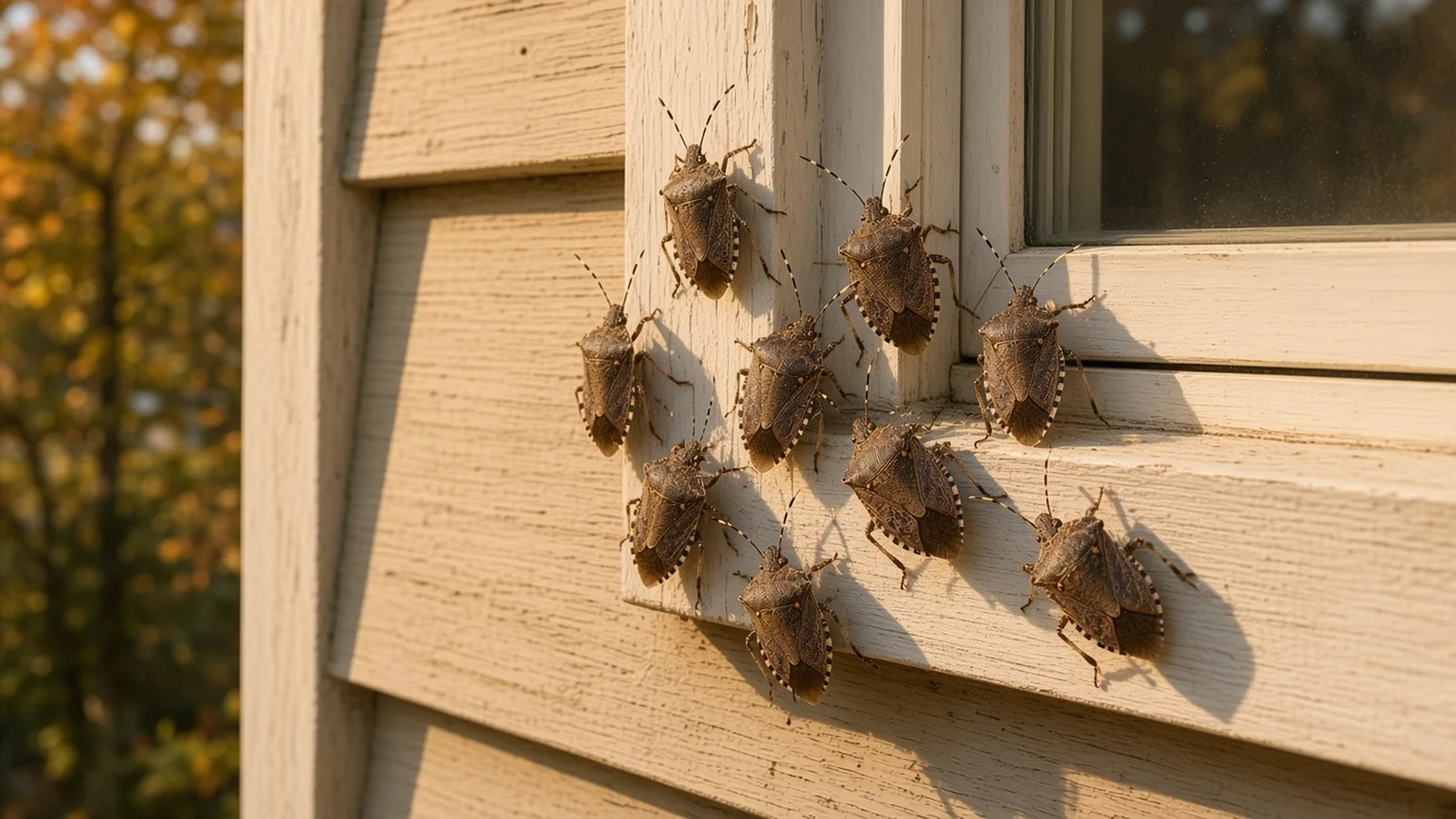
- Dozens a day, or clusters on the ceiling and curtains: a real infestation — the entry paths need sealing, not spraying.
- They gather in wall voids and attics to overwinter, so the numbers can spike again on the first warm days of spring.
- They do not reproduce indoors and cause no structural damage — the problem is scale and smell, not destruction.
Three or four bugs is not an infestation
Every autumn, stink bugs wander indoors across most of the eastern and midwestern US. A handful over a week is normal in an older house, and it says nothing about the building being dirty or badly maintained. Penn State Extension is explicit that the brown marmorated stink bug does not reproduce inside structures and causes no structural damage — they come in, sit still, and leave or die when the season turns.
The counts that separate a nuisance from an infestation
- Under ten a week: nuisance level. Vacuum or bowl them, then spend an afternoon caulking the obvious gaps.
- Tens per day, or a visible cluster: a real infestation. The bugs are using one or two specific openings — watch where they appear and seal those first.
- Hundreds, or a constant trickle through winter: they are already inside the wall voids or the attic. Interior spraying will not reach them; you need exclusion done properly and possibly a professional for the void.
- Repeat performance every fall: the population outside is established and the house is a known shelter. This is the case where a professional perimeter treatment before September has real value.
Where they hide inside a house
Stink bugs are looking for a cool, dark, dry place with a surface to cling to. That means attic knee walls, the tops of window frames, curtain folds, behind baseboards, inside wall voids around plumbing chases, and the back of closets on exterior walls. They do not go into food, fabric or furniture the way pantry pests and carpet beetles do, which is why an inspection for a stink bug problem looks at the outside more than the inside.
The annual timeline that explains everything
Adults come out of overwintering sites in late April to mid-May, mate, and females lay egg masses from May through August — about 28 eggs per mass, with up to ten masses per female according to the Xerces Society. Nymphs go through five stages over the summer. Then, from September into the first half of October, the new adults start looking for somewhere to spend the winter, and that is when a house with sunny siding stops being invisible to them.
So the bugs you see in February are not a new invasion. They are the same ones from October, waking up because a warm room told them it was spring. That is also why the fix has a deadline: seal before September and you never meet them.
What an infestation does not mean
No bites, no disease transmission, no eggs in the walls waiting to hatch indoors, no damage to wiring or timber. The two real costs are the smell when you handle them badly and the labour of removing them repeatedly. If you are seeing them in a rented apartment in numbers, that is a maintenance conversation with the landlord about window frames and screens — the same caulk-and-screen list from the natural removal guide.
When to call a professional
Call one when the count is in the hundreds, when they keep appearing after you have sealed the obvious entry points, or when they are coming out of a wall void you cannot access. A professional in that situation is doing an exclusion and void treatment job, not a spray-and-leave job. Ask what they will seal, not what they will spray.
More guides
Frequently asked questions
How many stink bugs count as an infestation?
There is no official threshold. In practice, a handful a week in autumn is a nuisance; dozens a day or a visible cluster on walls and curtains means the entry paths are open and need sealing.
Do stink bugs breed indoors?
No. Penn State Extension states the brown marmorated stink bug will not reproduce inside structures. They enter in autumn to shelter, not to nest.
Do stink bugs damage a house?
No structural damage. They do not eat wood, wiring or insulation and they do not infest food. The damage is to fruit and vegetable crops outdoors.
Why are there suddenly so many in spring?
The overwintering adults become active as indoor spaces warm up in late April and May. It is the same population from the previous autumn moving out, not a new invasion.
Do I need an exterminator?
For a handful of bugs, no. For hundreds, or for repeated appearances after you have caulked the obvious gaps, yes — and ask for exclusion and void work rather than a surface spray.