How to Get Rid of Stink Bugs Naturally: 7 Methods That Work
For stink bugs already indoors, start with removal and sealing rather than relying on indoor sprays. They enter through gaps around windows, doors and utility lines that you can seal. The methods below focus on physical removal and exclusion.
This page explains the no-pesticide methods in detail. For the full identification-to-prevention sequence and when to seek help, use the step-by-step removal guide.
TL;DR
- Vacuum visible bugs without crushing them by hand. The vacuum can retain their smell; keep an ordinary dry vacuum dry and handle its bag or canister outside.
- Drop them into soapy water to kill them; a bare vacuum bag just concentrates the odor.
- Seal window frames, door sweeps, utility penetrations and fascia with silicone caulk — this is the step that stops the next wave.
- Essential oils and dish soap sprays are deterrents at best, not knockdowns. Do not plan around them.
Why not spray first
Two practical reasons. Spraying a bug that is still alive means it releases its defensive odor as it dies, so you trade a bug problem for a smell problem. And most of the sprays sold for indoor stink bugs are contact killers aimed at the bugs you can see, while the ones you cannot see are behind siding and inside wall voids — places a household spray never reaches. Penn State Extension puts mechanical exclusion first for a reason: it is the only method that addresses the actual entry path.
1. Vacuum, but do it properly
Run a vacuum with a hose attachment over curtains, window tracks, screens and wall corners. For an ordinary dry vacuum, keep the collection bag or canister dry and handle it outside. Use soapy water inside the machine only with a wet/dry model whose manufacturer permits wet pickup, following that model's instructions. Penn State Extension notes plainly that crushing stink bugs or sucking many into a vacuum makes the smell quite apparent — the odor compounds concentrate in the airstream and the bag.
2. The soapy water bowl
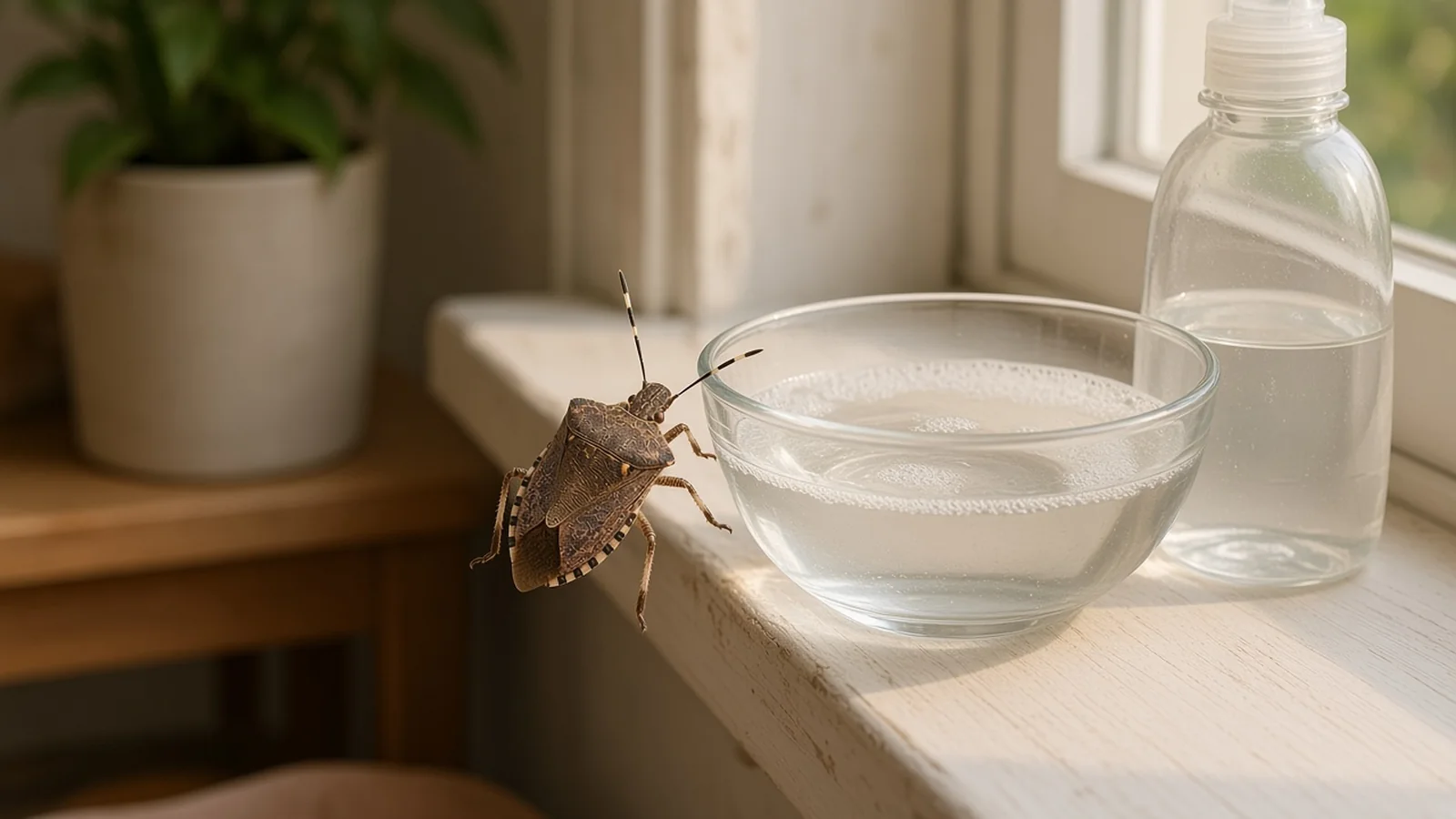
Flick or brush bugs into a bowl of warm water with a few drops of dish soap. The soap breaks surface tension so they sink instead of floating, and the water traps the odor. This is the method to use on a windowsill where a vacuum is overkill and squashing is out of the question.
3. Hand removal with a container
Slide a jar or cup over the bug and a card underneath, then take it outside. It sounds slow, and it is, but for a dozen bugs on a curtain it is faster than assembling a vacuum. Wear gloves if you are sensitive — Penn State Extension notes crushed bugs against skin can cause dermatitis in a small percentage of people.
4. A light trap in a dark room
Stink bugs are drawn to light and to warmth. A desk lamp aimed at a pan of soapy water in an otherwise dark room pulls some of the ones still moving around after dusk. It is a supplement, not a solution: it catches the active few, not the ones already tucked behind trim. Five DIY trap builds, including the shop-vac version and the cardboard shelter trap, are on the stink bug trap DIY page.
5. Seal the entry points — the method that actually ends it
Go around the outside of the house with silicone or silicone-latex caulk and hit every crack you can find: around window and door frames, behind the fascia and under the roofline, around utility pipes and dryer vents, and where siding meets the foundation. Repair or replace torn screens. This is the exclusion list Penn State Extension gives, and it is the difference between finding a handful of invaders and finding the whole wall void full.
The full version of this, including the interior-side checklist and what to do about a wall void that is already full, is in the step-by-step removal playbook. Why they come in, and how to keep them out, is on why stink bugs come inside and how to keep stink bugs out of the house.
6. Homemade bottle traps
A cut bottle inverted into its own base, with a little soapy water and bait at the bottom, catches some of the bugs that wander indoors. It is a decent weekend project and a poor substitute for caulk. Treat traps as a way to reduce the count in a room, never as the plan.
7. Essential oils and soap sprays: what they really do
Peppermint, clove and similar oils smell strong to a bug, and a soap-and-water spray will wet and eventually kill one you hit directly. Neither leaves any residue that keeps working, neither reaches behind a wall, and neither survives a rain. If you want to spray the outside of a window frame before the fall movement as a discouragement, that is the honest use of these products. Buying a bottle and expecting the invasion to stop is not.
What you should not do is fog a room and assume the smell will keep them out — the defensive chemistry stink bugs produce is itself an airborne irritant, and adding more scent to a closed room does nothing to the bugs behind the trim.
More guides
Frequently asked questions
Do essential oils get rid of stink bugs?
They can discourage a bug from staying where the oil was applied, and a direct soap spray will kill one, but neither leaves a lasting barrier. Oils do not reach into wall voids or behind siding, where most of the bugs are.
Does vinegar or dish soap kill stink bugs?
Dish soap in water kills them by breaking the surface tension so they drown, which is why the soapy bowl is the best no-touch method. Spraying vinegar on a surface does not create any residual protection.
Why do stink bugs keep coming back after I clean?
Because cleaning removes the visible ones and not the entry path. Until cracks around windows, doors, fascia and utility lines are caulked, the next warm afternoon brings a new group from the same siding.
Is vacuuming bad for the vacuum?
No, but the smell can linger in the bag and in the hose. For an ordinary dry vacuum, empty or seal the bag or canister outside and keep liquid out of it. Use water inside the machine only when it is a wet/dry model and the manufacturer permits wet pickup; follow the manual.
Will a bug zapper help?
A little. Stink bugs are attracted to light, so a trap in a dark room catches some of the ones still active at night. It will not touch the ones already behind trim.
Sources and scope
- Penn State Extension: Brown marmorated stink bug — Sealing openings, repairing screens, vacuum removal and the risk of odor in the vacuum.
- Ohio State University Extension: ENT-90 — Indoor removal, promptly discarding the vacuum bag, and why indoor insecticides do not stop further entry.
These sources support the exclusion and removal advice. They do not establish a percentage of bugs entering through sealable gaps, and this guide makes no such estimate.