Do Stink Bugs Fly? Adults Yes, Nymphs No
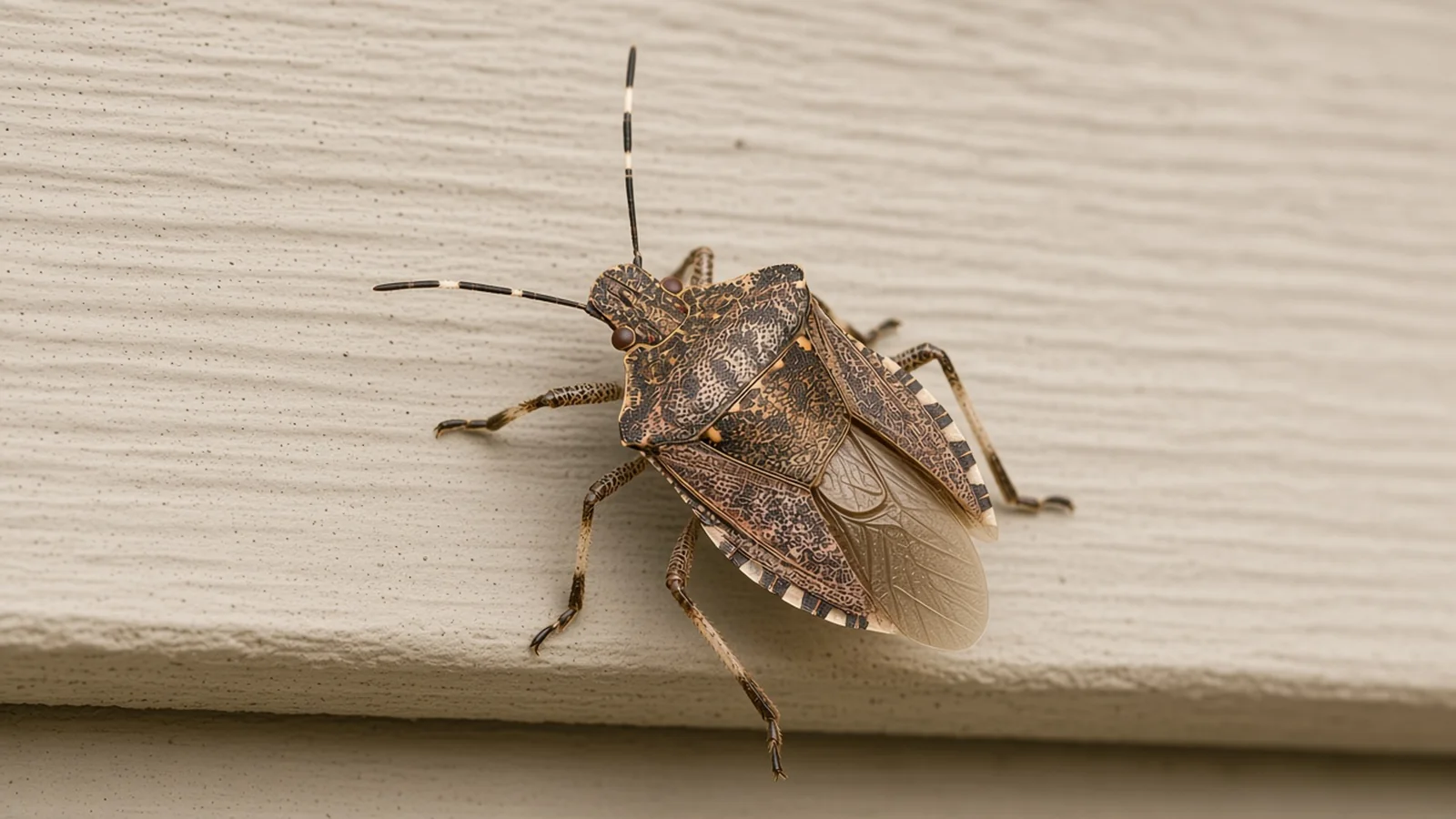
Yes — adult stink bugs are capable fliers, and their autumn flight toward warm walls is the reason they end up indoors. The wingless nymphs cannot fly at all, which gives you a free test: if it flew to the window, it is an adult, and the invasion is already underway.
TL;DR
- Adults fly. Stink bugs are true bugs with membranous wings folded over the back, and they use them constantly.
- Nymphs cannot fly. Wings only appear with the final moult, so anything small, round and wingless on a windowsill is a nymph.
- Flight is how they travel between summer feeding plants and autumn overwintering sites — including your siding.
- They are not long-distance migrants. They fly locally and hitchhike the rest of the way in cargo and vehicles.
- The flight-driven invasion has a deadline: seal gaps before the September movement starts.
Yes, they fly — and they are not clumsy about it
The National Pest Management Association describes stink bugs as strong fliers, and that is the detail that makes them a household pest rather than a field insect. An adult brown marmorated stink bug has membranous wings that fold flat under the shield-shaped shell, and it uses them to move between host plants and between host plants and shelter. On a warm October afternoon those two destinations are the same thing: a fruit tree in the morning, a sun-warmed wall in the afternoon.
Nymphs cannot fly, and that is useful to know
Wings appear only at the final moult. Up to that point the nymph is a smaller, rounder, wingless version of the adult, going through five stages. So if a bug on your curtain flew there, it is an adult. If it is crawling and looks oddly round, it is a nymph — which means it hatched nearby, probably in a garden, and walked or was carried in rather than flew.
It also tells you something about garden control: nymphs are the vulnerable stage for predators, because they cannot escape by air.
How far do they actually travel?
Locally, and in bursts. Stink bugs are not migratory insects that cross continents under their own power — the reason the species reached 46 states in two decades is a mix of short-range flight along suitable habitat and hitchhiking in cargo and vehicles, as Ohio State University Extension describes. What flight does give them is the ability to find a building from the surrounding landscape: a wall is visible from a distance and warm from close up.
Be careful with the numbers that circulate online about flight speed and distance. The useful, defensible statement is simpler: they are capable of sustained local flight, they can arrive at your house from the trees around it, and they do it in the same few weeks every year.
Why they fly at windows and walls in autumn
From September into October, adults that have finished feeding start looking for overwintering sites — dry, sheltered, cool crevices. In the wild that means loose bark and rock. Around people it means siding, window frames, fascia and screens, all of which are the same thing at a different scale. Penn State Extension describes the attraction to the outside of houses on warm fall days in exactly these terms. The flight is not random: they are landing on the warmest, most textured surface in the area, which is usually a house.
That is also why the invasion seems to come from nowhere on the first cold snap. The bugs staged on the wall over the preceding weeks.
What flight means for keeping them out
Because they arrive by air and land on the outside, the effective countermeasure is entirely on the building envelope: caulk the cracks around windows, door frames, utility penetrations and the fascia line, and repair torn screens. Penn State Extension puts mechanical exclusion first for precisely this reason. Traps and sprays inside the house catch what has already flown in; sealing decides whether there is anything to catch.
The interior plan, if they are already inside, is in the removal playbook. The autumn-specific version is in stink bugs in the house in winter.
Do they fly at night? Do lights attract them?
They are active during the warm part of the day and are drawn to light when they find it, which is why porch lights and lit windows collect them after dusk. The practical takeaway is small and cheap: during the September and October movement, keep exterior lights off where you can and check screens before turning inside lights on. It will not stop the invasion, but it reduces the pile at the door.
More guides
Frequently asked questions
Do stink bugs fly?
Yes. Adults are capable fliers and use their wings to move between feeding plants and autumn overwintering sites, which is how they reach house walls.
Can stink bug nymphs fly?
No. Wings only develop at the final moult. Nymphs are rounder, smaller and wingless, and are the stage most predators catch.
How far can a stink bug fly?
They fly locally rather than migrating. Their spread across the US came from short-range flight plus hitchhiking in cargo and vehicles, not from continent-scale flight.
Why do stink bugs fly into windows?
In autumn they search for sheltered, dry overwintering sites, and warm south- and west-facing walls and window frames look exactly like what they are after.
Do porch lights attract stink bugs?
They are drawn to light after dusk, so lit windows and exterior lights do collect them during the autumn movement. Keeping lights off reduces the numbers at the door but does not stop the invasion.